

https://youtube.com/shorts/LEFcvWGvBQ0?feature=share
A powerful 7.4-magnitude earthquake struck western Colombia on August 10, 2026, causing severe casualties and widespread infrastructure damage, the disaster had resulted in 188 deaths, 1,677 injuries, and approximately 1,600 damaged or collapsed buildings, while more than 3,000 people remained missingas rescue and structural assessment operations continued.
Large-scale earthquakes expose a critical challenge in emergency response: rescue teams must not only locate survivors, but also continuously protect the responders entering unstable and dangerous environments.
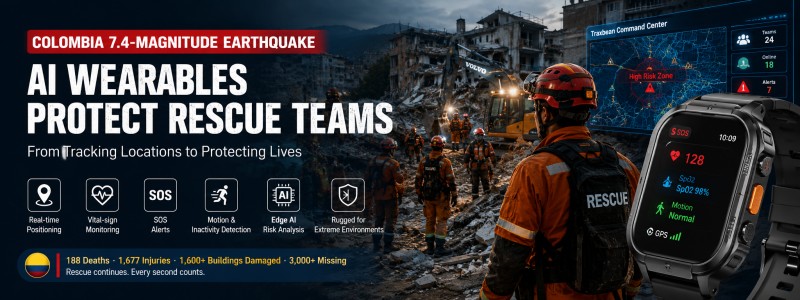
From Tracking Locations to Protecting Rescue Personnel
After a major earthquake, collapsed buildings, blocked roads, and damaged communication infrastructure can make rescue coordination extremely difficult.
Responders may need to enter unstable structures, underground spaces or areas with limited network connectivity. At the same time, command centers need real-time visibility into where personnel are located, whether they are moving normally and whether their physical condition is deteriorating.
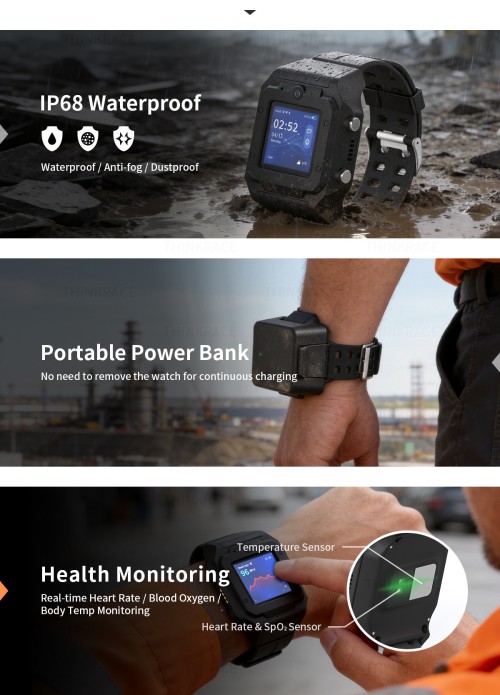
The ThinkRace smart wearable platform is designed to integrate multiple safety capabilities into a single field device, including:
- Real-time positioning
- Vital-sign monitoring
- SOS emergency alerts
- Motion and activity detection
- Edge AI-based risk analysis
- Rugged protection for demanding environments
Combined with the Traxbean management platform, rescue commanders can monitor personnel distribution and movement while receiving alerts related to abnormal inactivity, deviations from assigned areas or potential physiological risks.
This represents a shift from traditional location tracking toward a more proactive personnel safety intelligence system.
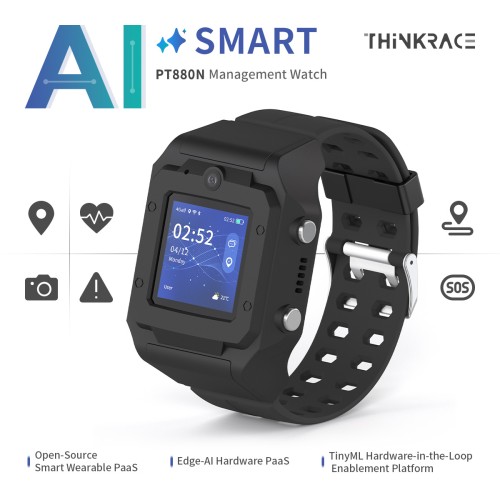
Edge AI Brings Risk Detection Closer to the Scene
Reliable connectivity cannot always be guaranteed during major disasters.
For this reason, next-generation emergency devices should not depend entirely on cloud-based analysis.
With Edge AI capabilities, smart terminals can process selected data directly on the device, including heart rate, motion status and abnormal inactivity. When potential risks are detected, the device can generate local alerts while transmitting critical information to the command platform when connectivity is available.
For example, if a responder remains motionless for an unusual period inside a high-risk structure while simultaneously showing abnormal physiological indicators, the system can generate a risk warning and provide commanders with additional information for withdrawal, medical assistance or reinforcement decisions.
在紧急环境中,减少信息延迟可以为干预创造宝贵的额外时间。
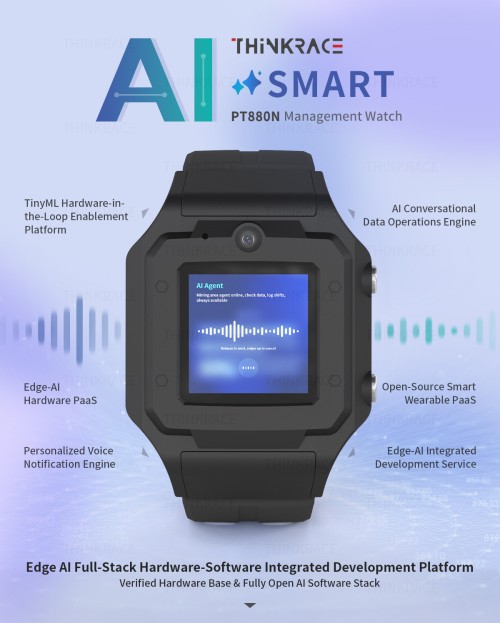
From a Single Device to a Connected Emergency Response Network
有效的灾害响应并非围绕某一块智能手表或某一台追踪设备而构建。
It requires a connected digital infrastructure linking frontline personnel, mobile devices and remote command centers.
ThinkRace is developing an integrated ecosystem combining:
Smart Devices + Traxbean App + Web Platform + Open API + Edge AI
This architecture can support emergency response scenarios such as earthquakes, wildfires, floods and other extreme environments.
核心能力可以包括:
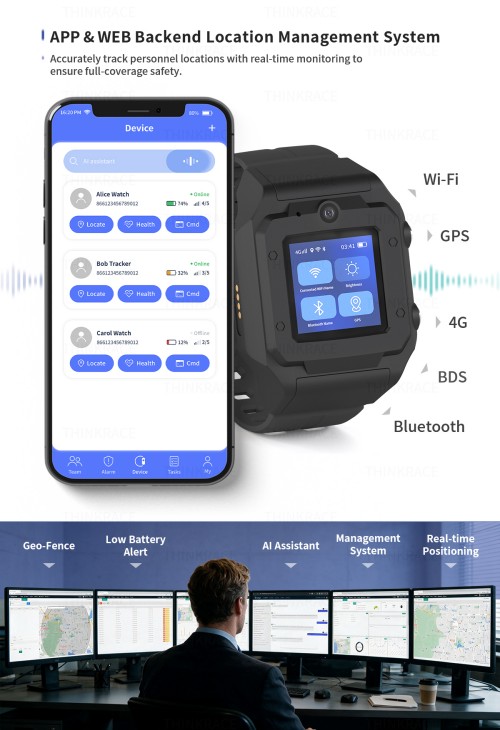
- Real-time responder location and route tracking
- Mission-zone and geofence management
- SOS and abnormal-status alerts
- Health and physiological monitoring
- Edge AI risk identification
- Command-center personnel coordination
- API integration with government or third-party emergency systems
Through its open software architecture, ThinkRace can also support customized integration with existing emergency command and public-safety platforms.
Making Every Responder an Intelligent Node in the Rescue Network
The Colombia earthquake once again demonstrates that emergency agencies need more than connected hardware.
Future rescue technology must be able to sense, analyze, communicate and respond.
By combining rugged smart wearables, real-time positioning, health monitoring, Edge AI and the Traxbean software ecosystem, ThinkRace aims to transform every frontline responder into an intelligent node within a connected emergency response network.
The goal is simple:
Detect danger faster.
Send alerts earlier.
Give rescue teams more time to act.
ThinkRace
Edge AI for Safer Emergency Response.